Barabo Back on Parade!...Circus Town USA Stays the Glorious Course

Barabo Back on Parade!...Circus Town USA Stays the Glorious Course
Do I see the spirit of Louise Ringling With Snake?
Showing posts with label Books and Magazines. Show all posts

Monday, February 10, 2025

Monday Morning Wake Up: Why I Will Not Read Battle for the Big Top ...

 You could never guess. 

I've known about  Lee Standiford's well received book, have skidded through a stream of consumer raves, hoping the local library would eventually order a copy.  It sounded like maybe a Big One. Not big enough for Oakland, half the town still behind masks, some on a waiting list for mask implants.

 So, I broke down and ordered a copy from Amazon. The moment it arrived, I opened it to find a form of type face insultingly small,worse yet, not clear black but half-dead grey.  And this, from a major publisher?  Great cover,  frugal interior design on life support.

The experts say that the publishing world is having a hell of a time, many books selling 0 copies, the average new tome, in a swampland of both traditional and self-publishing, selling around 300 to 500 copies.

I read many books, but I did not relish the thought of fighting my way across a grainy grey typeface terrain. Not unless the book were about John Ringling North or Rodgers & Hammerstein.

Here comes yet a bigger shock, for anybody who has a basic kindergarten knowledge of American circus history. While temporarily in possession of the orphan, I did a little checking to see how big a role Art Concello plays in the narrative.  So I looked for his name in the index.

Nothing!  

Heck, he was only to John Ringling North what James. A. Bailey had kind of been to P. To Barnum.  A big player.

I'll leave it at that, other to note that the book seems to cover a wider ground than what the title promises.

Friday, June 09, 2023

Circus King Delivers Sawdust, Spangles, and Mayhem


Book Review

The Killing of Lord Sanger, by Karl Shaw

Icon Books -- now available on Amazon Kindle. The book edition is due out March 4

Mourned by the multitudes in the wake of his shocking death, did Britain's Barnum really deserve their adoring accolades?  An enthralling new book by Karl Shaw, set in circus land UK during the Edwardian era, tells two interlocking stories, one of the legendary circus king, the other about the search for the  man who murdered him.The Killing of Lord George opens our eyes on what it was really like  trouping through the British Isles during an age of brawling competition between shows, when the survival of the fittest one season was no guarantee of the same for the next.

As for the morbid murder mystery, told in alternating chapters, this makes for a different kind of read which some may find off-putting -- back and forth between sawdust rings and homicide investigations. Oddly, as I returned to each, I was keener on its side of the narrative moving forward. A rare two for one.

George Sanger carried on the lavish spectacles established by circus founder, Phillip Astley, once the latter was gone.  He started out in his father’s circus as  a magician, and would became UK’s greatest showman, according to a Times of London obit quoted in  this admirably researched bio.  Sanger and his brother, John, at one time had a multitude of circus rings circling Europe.  All of which earned him high praise from The New York Times, calling him "the English Barnum."

 I knew nothing of the man himself other than his prolongation of the Astley legacy, and here his life comes suddenly spilling out, as messy as a clogged up sink faucet not unplugged in over a hundred years.  Which makes this man a difficult character to like. Brace yourself.  Among many devious attributes, Sanger was a chronic liar who may have self-anointed himself a Lord. He possessed a natural — or shrewdly staged — gift for philanthropy, so widespread as to enjoy the status of  “a national treasure, loved and respected by all,” in the words of Shaw.  It’s the darker side of Mr. Sanger that spreads gloom through the pages. 

Away from the spotlights and glitter, let’s start on the home front.  “He never let go of his hatred for his son in law,” writes Shaw, the sin being that his daughter had dared to wed a headline performer with a  “celebrated rival.”  This anger applied to other relatives along the way.

On the animal front, in a court of law today Sanger would likely have been hauled in and easily convicted of willfully ordering the killing of an old animal to serve as a prop in a cynical publicity stunt.

Savage Task Master 

Onto the shows:  The prim, compact circus lord could turn into a quality-control monster against underachieving performers. “He was sadistic if an artist failed during a performance.” reveals Shaw, to whose credit should go honors for such unfaltering attention, for it surely does nothing to gild his otherwise sunny portrait of the man's boundless humanity and good will to others.   For instance, take Sanger's treatment of a young wire walker who fell from her perch more than once. In stormy reaction, the offended boss “offered her a penknife from his pocket and said ‘here, don’t cut your throat, cut your bloody head off!’ Scores of performers came and went, and only the bravest or most loyal stayed the course. Those who fell short had their contracts terminated with a short: ‘Call yourself an actor? get off my stage!'"

Animal cruelty?  How about human cruelty?  I know how callously heartless circus owners can be, but I can’t think of one quite this sociopathic.

Perhaps The Killing of Lord George could have spent more time prose painting the man’s laudatory posters and programs, and the name dropping could had been  more elaborately fleshed out.  There is not a single image of circus, or the word itself, on the book’s cover.  It’s biggest failure, in my view,  is a glaring lack of full-page illustrations, preferably in color, that scream CIRCUS.  Grainy black and white images of news stories, diagrams and photos serve the story well, but may fail to captivate a wider audience.  
Sleuthing the sawdust shadows for tales of hardship and mayhem, Shaw cunningly compels with gripping accounts of the sudden dangers inherent in tent trouping.  It’s a miracle that none of the Sanger's were burned to death in the cinder box wagons in which they lived.   Thieves and rivals wishing to loot and defile could sneak up from every which direction.  Inglorious weather, bum crowds,  and periodic outbreaks of cholera, shuttered circus folk into shivering, food-deprived retreat.  In the worst of seasons, we read, some literally “starved to death.” Really?

The Lion Queen's Favorite

 For Anglophile history buffs in particular, the book is intricately placed in the times of Charles Dickens and Queen Victoria, both circus fans who make impressive contributions.  The Queen "had a weakness for lion taming acts.” In her diary, she wrote "one can never see too often."  She doted with delight over the wild animal displays of  Sanger’s young wife, Nellie, seen above, and this earned the show two command performances before her royal majesty.  

Sanger's obvious envy for his American rivals who competed with him on his own turf, mainly William F. Cody and Barnum & Bailey, produced a torrent of  petty unflattering scorn and ridicule, some published in his memoir. "There is nothing that American showman have ever done that Englishmen have not done first and not done better." Blatantly false.  For one thing, the failed three ring format that Sanger claimed to have first used in 1860 was far better used when Barnum & Bailey took it on the road in 1881 -- if, in fact, they had "stolen" the idea from Sanger, as he claimed. There is insufficient evidence to support the boast.  Another grandiose lie?

Another Man on Another Night

The darker side of our problematic genius comes to a grizzly end when he is murdered by an axe and razor, the most likely suspect being a young man who had shared his bedroom by night, until being ejected.  Shaw covers this in a strangely incomplete manner. Explains he, ever so politely without ever dropping the H word,  the relationship between the two “followed a predictable course.  He (Sanger)  would quickly form a very close attachment with his new favorite, shower him with presents and take him wherever he went.  In Herbert Cooper’s case at least, this intimacy included sharing a bedroom.  Then, just as quickly, George would drop him and replace him with another.”

Such was the fate of the tall and handsome, 29-year old  Cooper  “usurped in Sanger’s affections by Arthur Jackson, just as surely as Herbert himself had been a substitute for someone else. One day he was the old man's special friend,  the next he was effectively ostracized, excommunicated from the Park Farm inner sanctum.”

Notice how much fun our author seems to have over that last line, which only makes it more incredible that he would not have at least raised the subject of a homosexual union or fetish of some kind, if only to raise the issue and put it to rest. I was left fairly dumbfounded.

Shaw defers to the press, plenty interested in Sanger’s relations with Cooper.   Some  newspapers suspected revenge being the motive, had Cooper in fact been the assailant.  In the end, sketchy testimony leaves a muddled impression, although Shaw wishes us to believe otherwise. That is, that the killer was not Cooper.  The Times at the time believed he was.  Others believe it still to be a mystery.

There is much to hold your interest in this offbeat treat.  I have never dug deep enough to realize how the Brits were as drawn to the kink and gore of side shows as we were over here. Another topic that held my fascination was the  intersection between British and American circus owners over both their rivalries and the exchange and/or leasing of each other’s ideas, with vividly described cameos from likes of P.T. Barnum and William Buffalo Bill Cody. After all, we and they were in the same business when “elephants were the perpetual Victorian circus favorites.”  Which makes this book a must-read for serious scholars and lovers of circus history.

I’ll go out with a teaser.  You could  never guess how Cooper’s life came to an end.

Shaw is also the author of The First Showman: The Extraordinary Life of Philip Astley.

Memo to Masterpiece.  If you can’t see the drama in this, you don't deserve to be funded.   Over to you, ITV?   

first posted 1.9.23

re posted 1.10.25 

Thursday, December 23, 2021

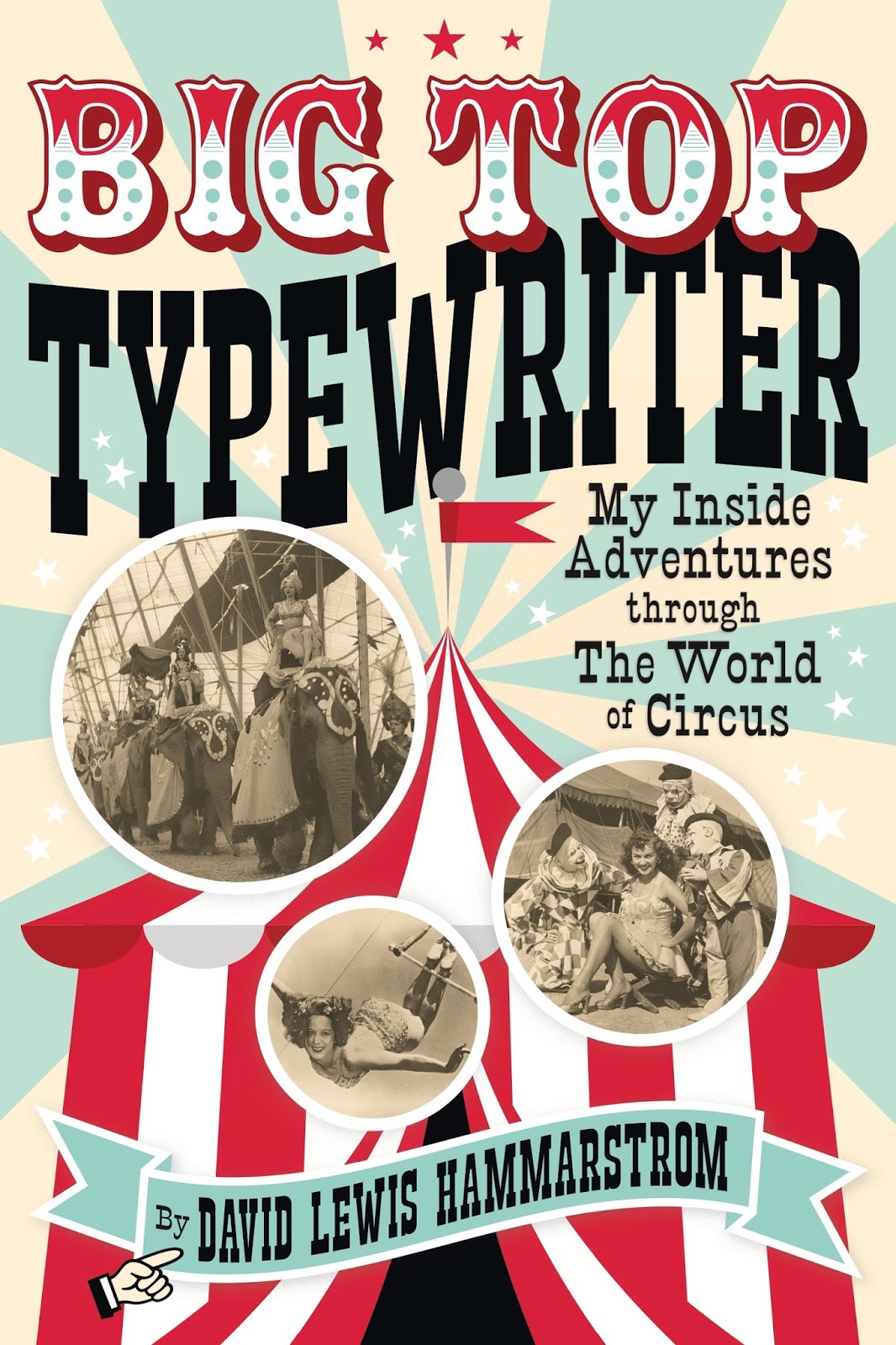
Step Right Up, This Way to the Big Book! ... Big Top Typewritter Recalls Last Great Days of AmerIcan Circus! ...

from 5.18.17
 
THIS WAY TO THE GLORY THAT WAS!

The perfect holiday gift --- for yourself or others! 
Buy now in Kindle for only $2.99 / paperback $16.99

Hear what the leading voice in book reviewing says:

 "CIRCUS FANS WILL BE THRILLED TO HEAR ABOUT CLOSE ENCOUNTERS OF THE RINGLING KIND [AS]  THE AUTHOR CELEBRATES THE INDUSTRY'S ACHIEVEMENTS IN PAGES STUDDED WITH REPRODUCTIONS OF POSTERS AND PICTURES OF FAMOUS CIRCUS ACTS ... HIS REVERENCE FOR THE CIRCUS SHOWS ITSELF IN ECSTATIC, OFTEN NOSTALGIC, DESCRIPTIONS OF MEMORABLE PERFORMANCES, AS WHEN HE LONGS TO 'RELIVE THE GLORIOUS AFTERNOON IN 1961 UNDER THE CLYDE BEATTY-COLE BROS. BIG TOP AT RICHMOND, VIRGINIA, WHEN BOOM BOOM BROWNING LEAD THE BAND WITH A JAZZY TINGLE.'... THE CHAPTERS THAT FULFILL THE PROMISE OF THE SUBTITLE SHINE."

 -- Publishers Weekly


THIS WAY TO BIG TOP TALES OF YORE 


ON THE INSIDE, SEE GREAT MOMENTS IN CIRCUS HISTORY ON OUR LIVING PLATFORMS!
SEE FRANCIS BRUNN TAKE ON THE  GREAT RASTELLI IN A JUGGLING SHOWDOWN!   
BEHOLD THE FLABBIEST TEASE IN THE TENT -- MISS OKLAHOMA BEARING ALL! 
SNIFF THE INFAMOUS ELEPHANT DUNG SAMPLER! ... 
WATCH JOHN RINGLING NORTH MAGICALLY REAPPEAR!
 BEHOLD SID KELLNER BLOWING HIS TOP UNDER THE BIG TOP!
THE SHOCKING FALL OF KENNETH FELD'S  GREATEST SHOW ON EARTH! 
A RIVETING RINGLING RETURN --
FIVE BROTHERS RELIVE THEIR FINEST HOUR!

THESE AND MANY MORE AMUSING WONDERS
CAN BE YOURS FOR ONLY  $16.99 / $2/99  IN KINDLE
SALE MAY END ANYTIME SOON! 
AMAZON IS NOW ON THE MIDWAY AND OPEN
STEP RIGHT UP, CONTINUOUS SHOWS!

.

"COMPELLING ... IMMENSELY PERSONABLE ... A THRILLING ROLLER COASTER RIDE THROUGH HIS CAREER AS A WRITER ... BEHIND THE SCENES LOOK AT THE WORKINGS OF THE CIRCUS INDUSTRY AND THE AUTHOR'S ENCOUNTERS WITH ITS STARS AND SHOWMEN.  A BREEZY PAGE TURNER."
Blasting News


"ENTICING ... INTRIGUING ... PROVOCATIVE ...  ALL, HOWEVER, SHOULD READ BIG TOP TYPEWRITER --- LIKELY A WINNER AS A CONTRIBUTION TO CONTEMPORARY CIRCUS LITERATURE"  
--Herb Ueckert, The Circus Report


"HERE IS A BOOK THAT HITS ALL MY BUTTONS ... THERE IS A CHARISMA TO HAMMARSTROM'S WRITING THAT KEEPS ME WITH HIM ... A UNIQUE TAKE ON CIRCUS AUTOBIOGRAPHY ... HIGHLY ENJOYABLE"  
—  Katharine Kavanagh, Circus Diaries, UK


"EYE OPENING ... AMUSING ... ANYTHING BUT YOUR STAID CIRCUS STORY ...   HIGHLY RECOMMENDED FOR READERS WHO LIKE CIRCUS EXPOSES."
  — Diane Donovan, Senior Reviewer, Midwest Book Review


“WORTH A READ FOR THE ENTERTAINMENT VALUE ALONE!”
 Amazon consumer review

This way to the Big Book! ... This Way to the Big Book! ...


"A BOOK WITH GLUE ON THE COVER ... I COULDN’T PUT IT DOWN!”
Douglas McPherson, Circus Mania


"LIKE A GOOD PERFORMANCE, IT ZIPS ALONG AT A GOOD PACE.” 
-- James Royal, American and European circus manager


Hurry!  Hurry!  Only $16.99 in paperback! $2.99 in Kindle!

Originally posted 5.18.17 

Tuesday, December 07, 2021

A Big Top Book Unlike Any Other: Paul Binder Teases With a Winning Big Apple Circus Sampler. Now in Audio!

As first reviewed here, July 14, 2014.  The audio is narrated by Max Samuels and Glenn Close.


The title may be too clever for it's own good, but Paul Binder’s new book,  Never Quote the Weather to a Sea Lion, is easy and fun to read, a charmer, filled with anecdotes about his years in and around the Big Apple Circus that he and Michael Christensen founded in 1977.

It is noting like I expected, although I don’t know what I expected, come to think of it, other than it would not tell us much about company conflicts, about Binder’s views of other circuses.  The book does, however, dish a little inside dirt (and pachyderm poo), some of which the author may live to regret.

Best of all, and rather surprising considering that Binder is possibly the most intellectually inclined circus producer in American history, the book is not a plodding polemic or an “academic,” to its redemptive credit.  So, those seeking a gender-bending study of how circus “reflects” the changing socio-economic-astrological-digital shifts in society will be just as let down as will the fans who count wagon wheels, tent poles, stringers, jacks and elephants.  Especially the latter. For several seasons, New York’s own circus has stuck with house-friendly critters, like horses and dogs, and the occasional tent-crashing skunk.

Here, Binder is a charming host, and here he does not drop the word “retirement.”  In the end, a third- person account states that he  “stepped out of the ring.”   I believe he did not want to retire, that he was gently, if not firmly, shown a way to make happy in the backyard and continue helping to raise money. 

How to talk about or  review this book? The best and fairest thing to do, it seemed, would be to go with questions raised by what appears on the printed page, rather than, for example, comparing what I find here with what  the author told me during a generous interview several years ago.

He jumps back and forth like an acrobat, and so there are holes in the narrative, some gaping and, one could argue, negligent.  Such as this:  Binder’s early account of how he set up the New York School for Circus Arts, which itself would present the circus, does not cover what became of that short-lived school. When I saw the show in 1978,  I was swept up by its youthful energy and creative spirit.  Some of the acts, as I recall, were developed at the school. Nothing from the ringmaster on its early demise.  I told you not to expect scholarship.

 Old World tested and certified:  Binder, left, and Michael Christensen, who honed their juggling on street corners in Europe, before returning to New York to found the Big Apple Circus in 1977.  Seen between them are Russian clowns Nina Krasavina  and Greory Fedin.  Binder also appears above, as the show's ringmaster.

 In its youthfully ambitious beginning, when the New York School for Circus Arts was a dream: Students perform New York Charivari, in the 1978 show. 

Another amazing gap: After writing about how he and Christensen secured their first  tent, a lot, and funding support, nothing about the first show, the reception, reviews, or the circus school’s diminishing role.  In fact, from there, the narrative leaps forward by five years! 

To his credit, Binder allows us to view his intense temper, in particular, during a box stacking act by David Casey (Oaf)that should have stopped at failed box number 3, but would not, due to the performer’s dogged resolve, contrary to Binder’s cues, to keep going until he succeeded.  Cut to an ugly row backstage — some of it shockingly audible to audience members  —  resulting in what, for a moment, sounded and looked ominously violent.  (Casey alleges in an angry review of the book on Amazon, that Binder’s account is partly fabricated.)

 In its matriculating years, when the circus turned away from youth and presented world class acts, like the Carillo Bros on the high wire, in 1984

Another inexplicable omission is the name of a legendary flyer, only alluded to in this rousing passage:

“Fifteen hundred people stare upward, motionless, neither breathing nor thinking but believing there is no way that flyer can ever break out of four — four! — somersaults, find a catcher’s arms in the blink of an eye, grab them, and hang on.  But what happens in the next instant calls into question every assumption this crowd has made about how the world works: hands and forearms do meet; they clutch, grasp, and hold ...
    And the crowd goes wild.”  

Guess who he’s talking about?  Not Tito Gaona, whom he loved, as anybody would, and who gets prime coverage in Never Quote.   No, a guy named Miguel Vazquez, whose name appears no where in the text.  The slight is astonishing.

For me, by far the ringmaster’s most memorable prose describes the feeling of connection to the crowd that came over him when he and Michael stepped into a circus ring for the first time, to appear at Anna Fratalinies new circus in France.  Here is how he begins: 

“... what I felt when I entered the ring was nothing less than pure joy — not just a personal sense of satisfaction and pleasure, but something far more powerful and deeply primal: true, elemental ritual celebration ...”  

His mantra is a two-word descriptor, “classical circus.” But he spends little time defining what exactly this means.  Would the definition include aerialists hooked to lifelines?  Does Ringling present “classical?” circus?  Or how about bout UniverSoul, or Cirque du Soleil?  And if not, why?

Binder believes that he, and a few others his age,  reintroduced the one ring show to a American audiences. They did not.  That distinction goes to  Polack Bros. Circus, which, in 1935, opted for one wonderful ring, and presented, during its heyday years, some of the greatest “classical circus” acts in the world.  In my boyhood, I saw the great Francis Brunn with Polack that Paul Binder would announce in his  own show thirty years later.

On animals, Binder's thoughts about their moods, and about how the best trainers work around those moods, are quite interesting and may be helpful, may not be.  I was impressed.

On occasion, he takes more space than need be, when he recounts acute looks of displeasure on the faces of opera patrons, Lincoln Center bound, having to pass a circus area freshly scented with late-breaking elephant emissions. 

Final chapters bring on some high drama from the Middle Kingdom, with the arrival of the Nanjing Acrobatic Troupe from China, resulting in one of its performers, Lanrong, wanting to defect, being locked up in a room by the troupe’s stern task master, Lu Yi (who now teaches circus arts in San Francisco), actually wanting free of  Yi rather than her country.  Here lies a tale made for a movie,  But, please,spare us the languid cameras of PBS.


Production soars in Pictureque, 2004, a near masterpiece.  That season, the Kovgar Troupe, from Russia, sent the show into orbit at finale.  

It’s a book you’ll be beguiled into meeting on its own randomly organized terms – part of its quirky charm.  Which gives it a rare easy-to-take effervescence.  The informally artful layout (short chapters, most headed with small sketch drawings, charming) is another asset.  Only are the poorly reproduced black and white photographs a drawback (and I thought some of mine in recent books were bad!) -- but who cares.  It's the writing that counts.

Binder’s mother never seemed sure about her son’s career choice.   He would call her up after another opening to share his enthusiasm, and she, per he, “asked hesitantly, almost as if she feared what the answer would be: “But ... Paul, ... are you ... are you happy?”

Perhaps more then than now.  Just after announcing  his retirement, the ringmaster told a TV reporter what a joy it was, every single day, to dress up in his costume and wait to go on. To face another ring. Another crowd.

You'll never read about this in Don't Quote the Weather.  A showman to the end, Paul Binder spares us a sad closing parade.


Act creator Paul Binder gave artistic birth to the clown Bello Nock, after watching him perform with his family on sway poles, and offering to help him create his own solo act. 
 
Originally posted, July 12, 2014

Friday, November 05, 2021

I Wrote Some Books ... Do Any of Them Still Sell?

I get sentimental over typing machines that serve me well. On the cusp of a new millennia, I typed out a love letter to my loyal royal portable. I still use it for short notes.

Here you see me getting tear-eyed over my dying (or then I assumed) 2008 Dell Vostro, which I still much prefer typing drafts on.  A few months ago, it was acting very erratic and weak, seeming to wobble and lose focus, so much so that I knew its days were suddenly over, ready to force myself to get a replacement.  But then, Vostro (maybe down with Covid), made a total recovery, back to its old reliable self, and I value it more, turning it on in the mornings when I write,  and then off for a day long break.

My best selling books were born in circus rings. Big Top Boss: John Ringling North and the Circus, moved almost 4,000 copies out of the warehouse. Still in print, it virtually never sells a copy. My latest royalty statement from University of Illinois Press showed Total Taxable Royalties: -6.96.  Does Uncle Sam owe me? 

Behind the Big Top, my very first book, put out by A.S. Barnes in New Jersey,  sold out its first printing of 2.500, and was slated for a return trip to the press when its new west coast publisher, Oak Tree, a house that catered to kids, went under.

Now here comes Broadway Musicals: A Hundred Year History, my third best selling title, of which I am amply proud. (An entire chapter on Stephen Sondheim was reprinted in Gale's annual Drama Criticism.)  After the initial rush of good strong sales, it might sell 10 to 20 copies most years, then something unexpected happened: What I regard as possibly my best written work has rebounded at the registers.  

Now nearly 20 years in print, the book is now selling closer  to a hundred copies a year, and it ain't being given away.  McFarland, who knows how to move books,  lists the paper version for $49.99, the kindle for $19.95.  I have come to believe that when somebody really wants a book, they will pay what they have to to get it.  But, if the interest is low, you can't give it away.  May I be pardoned from mentioning any of my own indie titles that fit this woeful  category? 

I had, yes, past tense, given the self-published world a good try, and  have little inclination to go back.  My first book, Riding Amtrak: The Rise and Fall of American on Rails (under a pseudonym), did remarkably well given totally no media reviews and a ragged bag  of split consumer comments, selling so far around 250 copies.  Not bad for me in Indie.  A few indie titles later, with zero sales humbling me, came another bright exception ...

I have always felt I got super lucky with this marvelous cover design, by Brian Pearce, which in my biased opinion, deserves some kind of an award.  By far the best cover of any of my six books on the spangled subject.  Believing it would be impossible to find a publisher willing to go with a narrative that candidly covered my dealings with various publishers and editors, I did not even try, but decided to self-publish. 

And  I was proved right by the half raving, half damning review in Publishers Weekly, which went ballistic over my gall to be honest.  What bothered me the most was how blatantly PW misrepresented and/or invented what I said with respect to my travails at publishing houses.  However, they did grant that, for much of the way, "circus fans will be thrilled." A red hot quote.

Of course, had a traditional house brought out Big Top Typewriter, it would easily have sold three to four times as many copies, if not more.  But it did sell decently well off the press, and I am cheered to see that rarely a month goes by without a few copies still moving off Amazon shelves   In the indie world for me that is big.

There is one big flaw in Typewriter: The irrelevance of the three-chapter middle section that covers my two books on musical theater -- the one you see above, and Flower Drum Songs: The Story of Two Musicals.  When recently I reread Typewriter, I was so happy about the whole thing that when I got to the Broadway chapters, I jumped them completely to keep the circus parade going.  Were I to do it over again, there would be but one brief chapter about my interval on the stage away from the sawdust.

Almost always, there are things I find that I wish I had done differently. But there is one book of mine that I feel comes as close to a thoroughly unified work as I have ever been able to bring off:  Inside the Changing Circus. 

Tuesday, May 25, 2021

SUNDAY OUT OF THE PAST: Blundering “Biography” of Leitzel & Codona, a Book You Can't Put Down --

Peaked at 13,284 page views  

 This revised review is drawn from additional research following the posting of my earlier review of the book. More about this at the end.

Book Review, Revised
Queen of the Air: A True Story of Love and Tragedy at the Circus
Dean Jansen, Crown Publishers

Here is a book for the ages, or so I originally thought and wrote.  The subjects tackled by author Dean Jensen — Leitzel and Codona, and Ringling in all its glory — are of course immensely compelling.

In her fiery heyday thrilling spectators with high-energy gymnastics under the big top, Lillian Leitzel was arguably the greatest solo star ever to grace the rings of Ringling. So transcendent a figure had she become, that American soldiers during World War I voted her “the most beautiful and attractive woman in all the world.” (5.26.25 -- confirmed by AI!*)  And that included Hollywood. Men of note, Henry Ford among them, are said in these precarious pages to have lined up to play suitor to the charismatic performer.  Did they or didn’t they?  I have my doubts.  Even with Alfredo, I have my doubts.

More likely, everything was carefully choreographed to build up an epic image bigger than life, bigger even than the circus itself.  A mythical image now made even more mythical (and at times heartlessly cruel) by an expedient author of dubious ethics. Make no mistake:  There is plenty here to enthrall and entertain readers with little interest in big top history.  Plenty here that may be genuinely rich and even revelatory. But for my money,  too much of it bears the mark of either incredibly careless research or slyly calculated distortion to inflate story-telling dynamics. Shame on Crown Publishers for daring to describe this a biography.          

Conceived in rape,  Leitzel grew up to be her own best agent, and once installed on the Ringling caravan — granted an entire car on the train, a private tent on the lot, and a maid, Mabel Cummings — she reigned like a self-appointed queen.  Nobody dared question the coming and goings of  their blazing headliner, whose first two ill-fated marriages come off looking more comical than sincere.  

She doted on giving circus children morning lessons in her tent.  And under the big top later in the day, her spectacular entrance pitted the diminutive dynamo — all of 4' 9", against the lumbering 6' 4" Willie Mosher, uninformed like a hotel doorman, who escorted her into the ring. (Believe it or not, there is no mention of Mosher in the book that I recall, nor does his name appear in the index.)  Lillian threw kisses to the crowds as she whirled furiously above them, teasing her way up to the big trick — her famous one arm rollovers numbering sometimes over a hundred. Those spinning revolutions composed, in Jensen’s own beguiling two-word description,  a “white blur.” I have never come across a white a blur in the scarce film footage of her act that I have seen.

A JOYFUL EXUBERANCE

How good was the act, really?  If I have a problem with Leitzel’s art and this sensationalizing treatment of her life, it is this: Of the footage I have seen from the  late 1920s,  I want — oh how I want — to feel a thrill I can’t quite feel. In photos out there, her leg extensions can be awkward, the transitions from one trick to the next, labored. Of the rollover plange, equestrian director Fred Bradna wrote in his book,The Big Top, “It was not a beautiful sight; it was not supposed to be.  It was a test of stamina.”  But there is something maybe more at work. By shunning  – or failing -- the polish of ballet that others such as Con Colleano incorporated, Leitzel may have intensified the passionate exuberance she projected, a rough tumbling spirit as lively as the three ring circus on the move.

ENTER HER GREAT LOVE
          

Trapeze god Alfredo Codona comes through as a bit more humble, though in the end he turns stark raving mad. He and Leitzel in love – or playing to each other’s need for constant attention and rumorizing —  tangled ruthlessly in romance, tormenting the hell out of each other by flaunting side affairs.  Roll the drums!  Silence all vendors!  Leitzel wins the prize for Greatest Act of Cruelty on Wedding Day.  That is, if you wish to buy Jensen’s blundering tale of how Leitzel kept Alfredo and guests waiting for over three hours at the alter. Yes, three hours.  In fact, calm down, kids — they were married on time between shows in Chicago.   It was at a wedding reception following the night show that Leitzel lost herself for a couple of hours, driving Codona into a panic.             

TWO UNFORGETTABLE ENDINGS

When Leitzel’s rigging fails in Copenhagen, sending her to her death in 1931, I wept. So did I weep being pulled though the last punishing days of Codona’s tragic end, trapeze god felled by a fall, down to failed ringmaster, and then onto car garage mechanic in Long Beach, CA.        

With Leitzel gone, Alfredo, right, defaulted to his flying partner Vera Bruce,center, begging her over and over again to marry him. Really?  According to Jensen’s end notes, he drew this stormy account from a story, “The Mad Love of Alfredo Codona,” allegedly penned by Annie Bruce for True Story Magazine in 1938,  a tabloid-leaning periodical known for taking rewrite liberties with submissions, and also publishing the work of fiction writers   Why did Jensen not defer to more credible accounts at hand, one by Fred Bradna in The Big Top;  the other by author Robert Lewis Taylor in Center Ring?  In fact, Bruce had been trying all along to steal Codona away from Leitzel.  

RINGLING AS NEVER BEFORE REVEALED         


Beyond Leitzel & Codona, the circus of Ringling, as narrated by the masterfully fact-altering Jensen, rides high and wide on revelations so startling as to leave me dumbfounded.  How did it take so long for some of these things to surface?  As long, maybe,  as it took Jensen to concoct them.  He mentions dozens of taped interviews, and I hope these will end up in a legit space.  They could turn out to be a gold mine.


For example, there is the sighting of married man Charles Ringling --- seen here with Leitzel and his son, Robert ---  spotted in a darkened movie house with his head resting on the shoulder of showgirl Anna Stais, his arm around her. The spotting of it was done in only a few nervous seconds by flyer Butch Brann, having just slipped into seats with “Dolores.”  In his own words, as quoted: “Then I saw who was in the row just ahead of us.  It was Charlie and Anna Stais ... Dolores and I hightailed it out of that row.” To the balcony they fled.  I have a question for those into movie house intrigue:  How could Butch have known for sure from the back of a figure sitting directly in front of him in a darkened theatre that it was his own boss. – one of the brothers who banned “accidental meetings” between the sexes on the show?  

 MISSING IN ACTION

Away from gossip and dirt in the shadows, how about something as important as who first threw the first triple?  Ernest Clarke was not the first flyer to nail it.  That honor goes to Russian-born  Lena Jordan, and if you don’t believe me, check out Wikipedia.   Still  don’t?  Okay, how about Guinness Book of World Records?  In fact, the record was impressively explored and certified on the Circus Historical Society history message board, July 1, 1965.

What makes these blunders more inexplicable is that Jensen drew from the likes of Fred Dahlinger (“how many times did I call on him while producing this book?”), Greg Parkinson, Fred Pfening III.  I have to wonder if any of these three were asked to read the manuscript or proofs.  

A LEGACY BARELY A BLUR

Curiously, the legacy of Lillian Leitzel does not hold up well in lists out there of all time circus greats, although these lists are so wildly different as to make each seem meaningless.Her name is totally missing in several I have examined. On others, she is never at the top. The History Channel places her at the bottom of a list of 8, below May Wirth.  She fails a list of 15, the most phenomenal female performers.  John Ringing North who saw her perform in her hey day, described her, "twirling like a human pinwheel high in the top of tent [who] may never find its equal as long as there is a circus anywhere."  

Sadly, we may never be able to see the Lilian Leitzel that North and others saw in her best years.   What I enjoy the most in film footage is the spectacle of her crossing the lot, with her maid trailing her, on her way to the big tent where the crowds are waiting to be thrilled.  I love the warm waving looks Lillian Leitzel gives to bystanders on the way. Her true love.

To me, Queen of the Air feels like contaminated goods, and I no longer have the faith in it to buy my own copy.  How would I know what to believe? Perhaps the experts of what qualifies as “biography” will find me off base. So be it.  I am not of the school that dismisses objectivity as out of date.   Some standards of conduct should forever be worth fighting for.  

TWO STARS, kindly awarded.

For more about the book, I discuss Queen for the Air with Timothy Tegge in an earlier post on the subject.  In fact, had Tim not answered my second e-mail asking for his input, this revised review would likely never have been.

 first posted 5.25.21, Park Your Memory at the Marquee.

SPECIAL BONUS FROM GEORGE BRINTON BEAL 

By sheer serendipity,  I came upon rare candor from author George Binton Beal, this found in his little magazine, The Call of the Calliope, from December 1955: “In public she managed to appear beautiful in a dainty, doll-like way that is difficult to describe.  Actually she was an ugly misshapen little woman  doing an ugly awkward act which by means of her great genius she made beautiful to behold.”

On her death” “Many show folk do not believe that her rigging broke and hint at fowl play ...I remember so clearly one  night when Leitzel and I were chatting ...She looked down at her taped and bandaged wrist, then up at her rigging ... Then, turning to me she said, ‘Some night, Mr. Beal, I’ll just let go and there won’t be any Lillian any more.'"

* Beware: I am learning that AI can be as wrong as right, and can't seem to self reconcile contradictory information it puts out in separate answers to essentially the same question,  differently worded. See my post a ways down, AI Goes to the Circus. re: the first triple somersault.

5.25.21   

41,620 3.10.26

Monday, April 26, 2021

Digging For Truth Over Sinking Sawdust: Timothy Tegge Takes on a Book Parading as Biography, the American Circus Parading Into Obscurity

Timothy Tegge, practically born in greasepaint, is many things in a world he sees fast disappearing — circus clown, ringmaster for Royal Hanneford, collector and historian, producer and performer, and more.  He is currently working on a piece about Ringling photographer Ted Sato for Bandwagon.  And he will be hosting his own mini-convention of fans, Central States Circus Soiree, at his home in Baraboo, July 9-11. 

When I caught up with him to chat about his take on the book, Queen of the Air: A True Story of Love and Tragedy, Tim was at the wheel of his truck, heading east on one of the interstates to visit three locations, each offering a circus collection that might be “mediocre" or might yield some golden goodies. 


Cliff Vargas, at the Hollywood Bowl date in February, 1989, celebrating the twentieth anniversary of Circus Vargas. 

I first met Tim during better, happier times for American circus, during its last great decade – make that the excellent 80s.  It was on a sunny Monday morning in Los Angeles at Philippes restaurant, sawdust on the floor, where fans and pros gathered weekly to share spangled memories and to dish out the latest gossip. I was then at work on a book about John Ringling North, and Tim virtually offered to help supply photographs, which he did.  And which he would do for another of mine, Inside the Changing Circus.  He always came through.

How far away, those wonderful days, days we took for granted. The circus they represented is now, at best, a pale and dying shadow of itself, and this Tim and I would face. But first, about the Lillian Leitzel and Alfredo Codona tome, a work which I may have prematurely and stupidly acclaimed.


Timothy, in fact, is something of an expert on the Codona-Leitzel story, having written his own book on the subject, and thus would be in a far better position than I to judge Queen of the Air’s overall historical accuracy. So I reached out to him.  On my own, I had found an ominous number of troubling assertions in Dean Jensen’s text, not the least being a gigantic blunder in giving credit for the first triple somersault to Ernest Clarke rather than to Lena Jordan. Might Tim have found others?

Indeed, he did. And we are not talking number of tent poles or sunburst wagon wheels. We are talking the lives and affairs of two legendary circus stars.  The holder of over two hundred letters, contracts, etc. by Codona and Leitzel–Vera BruceTim’s biggest letdown was the author’s failure, in his view, to capture the true spirit of their relationship. Of course, interpretation of such matters is always partly subjective.

Okay, let’s test his complaint anyway.  I mentioned how astonished I was that Lilian had kept Alfredo waiting over three hours at the alter on their wedding day. Not possible, replied Tim. “They were married between shows in Chicago.”  

Indeed, if you believe in the work of Fred Bradna (The Big Top), and author Robert Taylor (Center Ring), that is what happened.  At a post wedding reception after the show, Leitzel lost herself in the crowd, perhaps suffering from opening night jitters, and for a couple of hours, Codona went nearly mad trying to find his brand new spouse. Fearing she had already strayed?  BTW: Does anybody believe those two actually went for the whole Honeymoon package?  Okay, maybe a token once, and then never again.


I mentioned to Tim how, according to Jensen, Codona begged and begged and begged Vera Bruce, who flew in his act, to marry him. This was, of course, after Leitzel had taken her fatal fall.  Tim could not see that happening. It was the other way around.  Bruce, wanting to outshine Leitzel as an aerialist, had been after Alfredo.  I have all along assumed that a woman in her position would have likely done just that.   

In fact, a year into his marriage to Leitzel, according to Bradna,  Codona had become “emotionally involved” with co-flyer Bruce, seen above with him,  and thus was a triangle born.  “To steal Leitzel’s husband was a triumph for her.”  Their marriage ended in tragedy, when Codona first took a gun on Bruce, only 32-years-old, and then aimed it at himself.

All of which lends credence to Tim’s belief that Jensen saw a great movie in the story and “sensationalized” his narrative in order to enhance its marketability to movie producers.  So we are talking something closer to a historical novel, which is what I vaguely assumed the book to be when I first heard of its coming out and of its being compared to Water for the Elephants. If this is so, Jansen performed a con job on the American media and book world.  Shame on his publisher, Crown, for daring to call it a “biography.” 

I have reread parts of the book, and am revising my review. I will not be placing Queen of the Air high on my list, in fact anywhere on my list of favorite circus tomes. A novel is a novel is a novel.  And this book ill-serves the cause of history by being so blatantly misrepresented and sold to the pubic.  How I looked forward to buying my own copy and reading it again.  How gone is that feeling.  

In fact, to venture into its pages again, I would feel myself treading a minefield of hard fact and dubious misinformation, at every turn wondering, did that  really happen.  And still wondering how in the world Jensen could have overlooked a key component in Leitzel's extravagant showmanship: Willie Mosher, the 6' 4" footman attired as a doorman, who escorted the 4' 9" Great One into the ring, and sometimes carried her out following one of her notoriously staged fainting spells.  His name is nowhere n the index, nor do I recall reading of him.  How did the author miss that?  And ... what else might he have missed - or botched?  

Where We Are Now -- If Anywhere?

How quickly good intentions fall under troubled big tops.  Dr. Neil Kahanovitz lasted barely more than a single season of shining hope, trying to bring Big Apple Circus out of bankruptcy.  His successor lasted not much longer.  Circus lords are a rare breed.

Timothy Tegge is as much realist as an enthused exhibitor of circus history, of which he has assembled a formidable collection, sometimes taking parts of it on the road.   The White Tops editors, valuing Tegge's  "insider status,” asked him if he would “look into his crystal” ball and write a realistic piece for the magazine. Tim did just that. I have read the piece, thoroughly first rate, striking a fine balance between realism and hope.  

The editors received his prose with rapture. Came the eve of publication, and Tim received an e-mail from the same editors informing him that they hadn’t the room to fit his piece into the issue, but  invited him to “revise” and resubmit with more upbeat photos.  He walked away, obviously unimpressed.  I would suggest the CFA needs an overhaul.

Is the American circus dead, I asked Tim, still at the wheel, still heading east. “It’s been on seriously shaky grounds over the last 20 years,” he answered.  On life support? “That’s a good way of putting it.”  Perhaps what bothers him the most is how a new generation is viewing the circus as “no longer important,” but a relic of another time.

Okay, I press him for specifics on a few of shows: 


Big Apple Circus?

“Gone.”  He caught the last edition produced by the new owners on Easter Sunday 2019, up in a suburb of Boston.   It was “a good show,” he granted, but rather average. Their biggest failure in Tim’s opinion is marketing.  He recalls people touring with the BAC show reporting around 20 people in the seats during the weeknights, and half houses at best on the weekend, the same, he learned for other dates, as well, including Lincoln Center.

A Ringling Return?

He doubts that Kenneth Feld might revive the circus, as he promised to do a couple of years back  Feld is no longer a young man, and he would “have to start all over from scratch,” nor can Tim see the daughters being able to carry on, were their father up to such a herculean challenge. Our ringmaster at the wheel figures that the Ringling press release touting a return (which not a single media outlet picked up) may have been simply an action necessary to legally retain possession of the show’s famous title.

“When you say ‘the greatest show on earth,’ people think elephants and tigers.” In other words, literally they can’t bring it back. 

 UinverSoul Circus?

The big winner. Maybe the “the only show that can capture the major city market nowadays, certainly more so than Soleil,”pipes the man at the wheel, "and it's a very good show!"  Very interesting, Tim. We agree on this: they can play the race card to the hilt — Black owned!  Black owned!  Black owned!  And maybe out-woke the wrath of PETA.  Cedric Walker has a loyal audience base among African Americans, and no doubt the groveling support of all Woke movements everywhere that together have been tearing down American big tops for years. I myself truly believe that American culture — “tree hugging morons, ”in Tim’s words — brought down the circus.

Carson and Barnes?

He is not so sure.  Tim can see two new forms emerging: For one, the Byrds offering a circus attraction the year around in Hugo, thus switching from touring show to tourist town.  Keeping their elephants “safe and at home,” and sparing themselves the stress of moving them across state lines and “sweating out individual state authorities acting out a witch hunt”.

Two: a new template for American circus, returning to the original form we “adopted “ from the Brits. A one ring with horses and ponies, enhanced with modern technology. Sounds a little like what Big Apple in its better Binder days was kind of doing. 

Tim with wife Barbara, daughter of foot juggler Miss Loni, whose act she continues on.  You've seen Miss Lonie in DeMille's The Greatest Show on Earth.

There will come a day, Timothy Tegge believes, when the wild animals return, but it won’t be in our lifetimes.  And I agree.

We could have gone on for another two hours.  Even at its lowest point in history ever, circus is still the damnedest subject to talk about. 

first posted 4.26.21